%20(1).png)

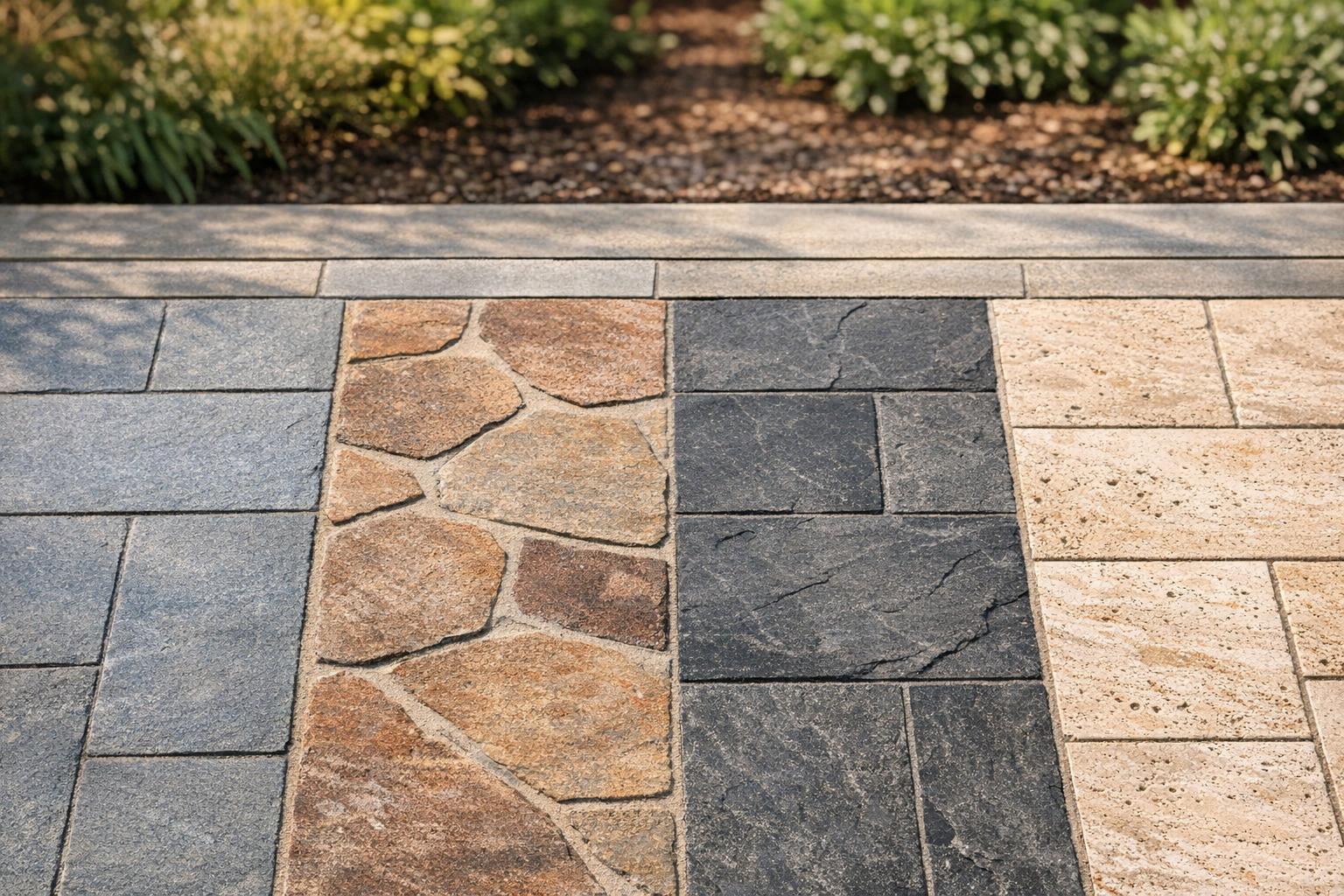
Choosing the right stone for your patio means balancing durability, safety, and style while considering your budget and local climate. For Memphis homeowners, factors like humid summers, freezing winters, and rainfall are key. Here's a quick guide:
Whether you're prioritizing longevity, aesthetics, or safety, the right stone and proper installation ensure a patio that lasts for years.
Before you dive into choosing the perfect stone for your patio, take a step back and think about what you’ll actually use the space for. The purpose of your patio should guide every decision you make about materials.
Consider your daily outdoor activities. Will you be hosting dinners, lounging by the pool, or simply creating a space for the kids to play? For dining and entertaining, a flat, stable surface is key. Materials like brick, cast pavers, slate, and bluestone are ideal because they provide a firm foundation for chairs and tables. On the other hand, avoid uneven surfaces like fieldstone or loose gravel, which can make furniture wobbly and unstable.
If your patio will be near a pool or in a consistently wet area, safety becomes a top priority. Go for slip-resistant stones - those with rough textures or unglazed finishes can help prevent accidents. For families with kids or pets, durability is another must. Slate or manufactured pavers are great options since they can withstand heavy foot traffic and wear.
If your patio will be used by someone with mobility challenges, such as those relying on wheelchairs or walkers, smooth and even surfaces are non-negotiable. Poured concrete or large, tightly-fitted pavers are much better choices than uneven flagstone.
Proper drainage is also essential. To prevent water pooling near your home, slope the patio surface 1/8 to 1/4 inch per foot away from the house. In regions with freezing temperatures, make sure to excavate at least 12 inches deep to avoid frost-related issues. When laying stones directly on soil or sand, use pieces that are at least 1.5 inches thick to prevent cracking. Thinner slabs will need a concrete base for added support.
Once you’ve nailed down the design and safety considerations, it’s time to figure out the size and cost. Start by measuring the length and width of your planned patio to calculate its square footage. For instance, a 12-by-16-foot patio equals 192 square feet. Always order a bit extra - about 5%–10% more material - to account for cuts and waste. Keep in mind that one ton of stone typically covers around 120 square feet.
If you’re hiring professionals, expect to pay between $15 and $30 per square foot for installation. For DIY enthusiasts, the cost drops to $4–$7 per square foot. Material choice also plays a big role in your budget. For example, a flagstone patio can cost nearly three times as much as a poured concrete one. Bluestone averages around $25 per square foot installed, while Wisconsin flagstone can go up to $36 per square foot. Manufactured concrete pavers, on the other hand, are about 30% cheaper than natural stone after installation.
Here’s a quick breakdown of professional installation costs based on patio size:
| Patio Size | Professional Cost Range |
|---|---|
| 12x12 feet | $2,160–$4,320 |
| 16x16 feet | $3,840–$7,680 |
| 20x20 feet | $6,000–$12,000 |
To save on costs, consider sourcing stone from local quarries, which can significantly cut down on transportation fees. Don’t forget to budget for extras like site preparation, gravel and sand for the base, and any necessary permits. If utilities are involved, permit costs can range from $530 to $3,040.
When choosing the right stone for your patio, it’s important to consider how Memphis's unique weather and soil conditions will affect its durability. With hot summers, occasional winter freezes, and plenty of rain year-round, the local climate presents some challenges for outdoor hardscaping.
Memphis falls within USDA hardiness zones 7a–7b, so your patio materials need to withstand both extreme heat and freeze-thaw cycles. Here’s why that matters: when water seeps into porous stones and freezes, it expands, causing cracks over time. Stones like bluestone and limestone, known for being dense and less absorbent, are better equipped to handle these conditions.
Summers in Tennessee bring another issue - heat retention. Dark stones can become scorching hot, making them uncomfortable to walk on barefoot. Travertine is a great option here, as it stays about 20% to 30% cooler than other materials due to its porous structure, which helps retain moisture. If you prefer other stone types, opt for lighter shades like white, tan, or light gray to reflect sunlight and reduce surface temperatures.
Managing water effectively is just as important as selecting the right stone. Memphis receives between 45 and 53 inches of rain annually, well above the national average. Without proper drainage, you could face pooling, erosion, and even a shifting patio. The local soil, primarily silty loams and clays, tends to compact easily and slows water absorption.
"Those weather patterns, combined with local soil types, make durable, properly installed hardscape features particularly valuable." - Resolution Landscapes Hardscapes Pools LLC
To address these challenges, start with a compacted granular base and add geotextile fabric beneath your patio to prevent settling and shifting. You might also consider solutions like permeable pavers, French drains, or graded terraces to direct stormwater away from your patio.
High humidity in Memphis brings another issue: algae, mold, and mildew, especially in shaded areas. Non-porous materials like porcelain or sealed natural stones are better at resisting these problems. If you choose a porous option like flagstone or limestone, applying a high-quality sealer can help protect against water damage and organic buildup.
Preparation is key to a long-lasting patio. In Memphis, site preparation typically accounts for 20% to 40% of your total project cost, but it’s worth the investment. Proper excavation, base materials, and drainage systems will save you from costly repairs in the future.
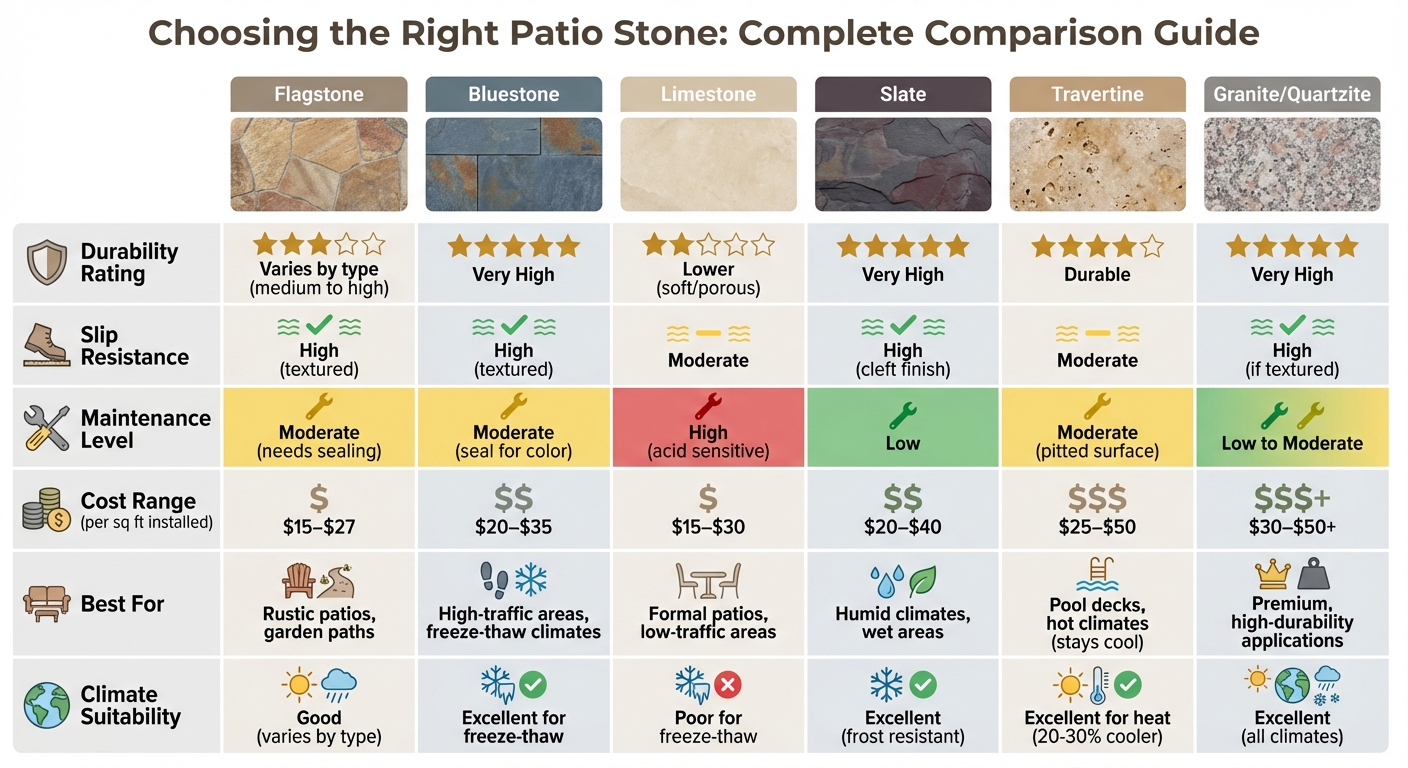
Patio Stone Types Comparison: Durability, Maintenance, and Cost Guide
When selecting the right stone for your patio, it’s important to balance durability, maintenance needs, and style. Memphis's climate plays a big role in this decision, so understanding how different stones perform under local conditions is key. Here’s a breakdown of popular patio stone options, including their strengths, challenges, and costs.
Flagstone is a versatile option made from sedimentary or metamorphic rocks like sandstone, slate, or quartzite. Its irregular, flat slabs create a rustic, natural look that works well for informal patios and garden paths. Plus, its textured surface provides great slip resistance, even when wet.
Durability depends on the specific rock type - quartzite flagstone is incredibly tough, while sandstone is softer and more porous. Regular sealing is usually needed to prevent stains and algae buildup. Installation costs range from $15 to $27 per square foot, including labor and materials. For a 30-square-foot patio, materials alone can cost $750 to $850, excluding delivery. Be sure to account for extra material to cover cuts and breakage, and ensure proper slab thickness to avoid cracking. On average, one ton of flagstone covers roughly 120 square feet.
Bluestone, a dense sandstone, stands out for its blue-gray tones and excellent weather resistance. Originating from the Northeast U.S., it’s built to handle freeze-thaw cycles, making it a smart pick for Memphis winters, where occasional freezing temperatures occur. Its textured finish ensures strong slip resistance, even in wet conditions.
Bluestone requires moderate maintenance - sealing helps preserve its color - and it holds up well in high-traffic areas without significant wear. It’s a stylish and durable option for patios that see frequent use.
Limestone offers an elegant, classic look with light shades like beige, tan, and gray. Its smooth texture pairs beautifully with formal patios and traditional home designs. Landscape designer Derek Archer of Brentwood Landscape & Design emphasizes:
"If you have limestone on your house, then you might want limestone on your patio".
However, limestone is softer and more porous than other stones, making it vulnerable to wear from heavy traffic and damage from acid rain. Even substances like fruit juice can etch its surface, so only pH-neutral cleaners should be used. It’s not ideal for freeze-thaw climates or high-load areas, making it better suited for low-traffic, covered patios in drier conditions.
Slate is a metamorphic rock known for its smooth, layered structure and natural color variations. It’s highly durable with low water absorption, making it resistant to stains and frost damage. Many consider it a top choice for outdoor use due to its resilience and water resistance.
Its cleft finish provides excellent slip resistance, a key feature for wet areas. However, polished slate should be avoided outdoors as it becomes slippery when wet. Slate requires minimal maintenance, though occasional sealing can enhance its appearance. It’s a great fit for Memphis’s humid conditions and occasional rain.
Travertine, a type of compacted limestone, features a pitted surface that stays cool underfoot. This makes it an ideal choice for pool decks and sunny patios, especially during Memphis’s hot summers. However, its porous texture does require moderate maintenance.
For maximum durability and luxury, consider granite or quartzite. Granite scores between 6 and 7 on the Mohs hardness scale, while quartzite reaches around 7, making both highly resistant to scratches, stains, and heat. These stones are perfect for high-traffic areas. As Classic Marble explains:
"Quartzite is even harder than granite, making it one of the most durable natural stones available for home use".
Basalt, a dark volcanic rock, is another premium option. It resists moisture and extreme temperatures, offering a sleek, modern look for patios. Keep in mind that these premium stones require annual sealing to maintain their appearance.
| Stone Type | Durability | Slip Resistance | Maintenance | Cost Range (per sq ft) |
|---|---|---|---|---|
| Flagstone | Varies by type | High (textured) | Moderate (needs sealing) | $15–$27 installed |
| Bluestone | Very High | High (textured) | Moderate (seal for color) | $20–$35 installed |
| Limestone | Lower (soft/porous) | Moderate | High (acid sensitive) | $15–$30 installed |
| Slate | Very High | High (cleft) | Low | $20–$40 installed |
| Travertine | Durable | Moderate | Moderate (pitted surface) | $25–$50 installed |
| Granite/Quartzite | Very High | High (if textured) | Low to Moderate | $30–$50+ installed |
Each stone type has its own unique qualities that cater to different styles, budgets, and maintenance preferences. Choosing the right one depends on your specific needs and how you envision your patio space.
Selecting the right patio stone means juggling upfront costs, maintenance needs, and long-term performance. Let’s dive into how to make smart choices that ensure your patio stands the test of time.
On average, installing a stone patio in the U.S. costs around $9,000, with professional installation typically running between $15 and $30 per square foot for materials and labor combined. For a standard 300-square-foot natural stone patio, expect to spend between $6,250 and $11,500. However, the final price depends on more than just the stone itself.
Material choice is the largest cost factor. Natural stones need to be quarried and transported, which adds shipping costs compared to manufactured pavers. To save on transportation fees, opt for stone types sourced locally. Labor costs, which range from $50 to $100 per hour, also add up since installing natural stone is labor-intensive - each piece varies in thickness and requires careful leveling.
Design complexity can also drive up costs. Features like curved layouts, multi-level designs, and intricate patterns (e.g., herringbone) require more cuts and expertise, increasing labor expenses.
Tony LoBello, Design Director at Mariani Landscape, sums it up:
"Masonry is probably the single most expensive component of your landscape, but done right, it will last forever".
A well-installed stone patio typically offers about a 70% return on investment. But beyond the upfront price, ongoing maintenance plays a key role in keeping your patio looking great for years to come.
Maintenance costs vary widely depending on the type of stone. Annual cleaning and sealing typically range from $100 to $500, but some materials are more demanding than others.
Bluestone is dense, durable, and stain-resistant, but it still needs sealing every 6 to 12 months to protect against acidic spills and organic stains from leaves. A simple water test can help you determine if resealing is needed: pour a small amount of water on the stone and wait 30 minutes. If the area darkens, the stone is absorbing moisture and needs a fresh layer of sealant.
Flagstone can be trickier to maintain due to its irregular shapes and wide joints, which collect debris and encourage weed growth. For a lower-maintenance option, consider a mortared installation on a concrete slab to eliminate weed issues. If using a sand-set method, fill joints with polymeric sand, which hardens when wet and discourages weeds. Caitlin Sole from Better Homes & Gardens advises:
"A mortared installation... will give you years of maintenance-free use of your flagstone paver patio".
Brick, on the other hand, requires more upkeep in shady areas, where moss can grow and needs to be scrubbed off with a bleach solution. Peter Walsh explains:
"In shady areas, slippery moss grows on the bricks and it has to be scrubbed off using a bleach solution and brush".
Brick is also porous, meaning it retains moisture and may crack in freezing conditions.
For minimal maintenance, porcelain tile and granite are excellent choices. Porcelain is highly stain-resistant, while granite offers exceptional durability with little upkeep. Sealers for natural stone generally need reapplication every 2 to 3 years, but high-traffic or harsh weather conditions may require more frequent attention.
When cleaning, avoid acidic or alkaline household cleaners, which can damage stone and strip its sealant. Instead, use pH-neutral cleaners designed for outdoor stone. The Lennys from Granite Gold warn:
"The problem with most indoor-outdoor floor cleaning products is that they tend to either rely on harsh acidic or alkaline chemical mixtures that can be damaging to the stone's seal".
Regular sweeping of leaves and grass clippings also helps prevent stains and grime build-up. With proper care, your patio will remain a centerpiece of your outdoor space.
The key to a long-lasting patio lies in a solid installation. A properly prepared base prevents shifting, sinking, and water damage. For Memphis’s warm, humid climate, experts recommend a base made of limestone screening and crushed stone or gravel. In areas with poor drainage or heavy clay soil, placing geotextile fabric at the bottom of the excavation can prevent sinking and improve water flow.
A solid base typically includes 4 to 6 inches of compacted gravel, topped with 1 inch of sand. Proper compaction is critical to avoid settling. Bill Bencker of Ace Avant Concrete Construction advises against using round stones or pea gravel:
"Round stones or pea gravel don't interlock like crushed stone. Even though they might look similar, the round shape doesn't provide a solid base because they don't compact well. Over time, they'll shift and settle, causing the surface to become uneven".
A slight slope (1/8 to 1/4 inch per foot) ensures proper drainage, preventing stains and structural damage. Additionally, stone thickness matters - choose stones at least 1.5 to 2 inches thick to handle foot traffic and furniture weight without cracking. Using polymeric sand or stone dust in the joints helps lock the stones in place, discourages weed growth, and prevents ants from nesting.
While DIY installation for a 200-square-foot flagstone patio can cost $855 to $1,385, professional installation may go up to $8,400. The higher cost is an investment in durability - a professionally installed stone patio can last for decades with minimal upkeep.
Once you've ensured your patio is functional and durable, it's time to focus on how it fits into the overall design of your home and outdoor space. A well-designed patio should feel like a natural extension of your home, blending seamlessly with its architecture and surrounding features.
To achieve a unified look, consider your home's exterior materials - not just the siding but also the roof and accents. Choose patio stone colors that complement these elements. For instance, warm browns and tans pair beautifully with wood or brick exteriors, while cool grays work well with sleek, modern designs. If your home features multiple materials or intricate brickwork, opt for a neutral, mid-tone stone to create balance and let your home's details stand out.
The architectural style of your home also plays a big role in choosing patterns. Modern and contemporary homes often shine with smooth, geometric layouts in cool, neutral tones. Traditional or Colonial homes are enhanced by earthy hues arranged in classic patterns like herringbone or basketweave. For rustic or farmhouse designs, consider irregular flagstone in a random ashlar pattern to evoke a natural, organic feel.
Before making a final decision, test stone samples on-site under natural light. Lighting can vary significantly throughout the day, from soft morning shadows to bright midday sun, which can affect how the colors appear. Don’t overlook joint sand - it can subtly enhance the design. Matching the sand color to the stone creates a smooth, modern aesthetic, while a contrasting tone highlights patterns and adds a timeless charm.
Your patio should connect effortlessly to other hardscape elements like walkways, retaining walls, and water features. For pool decks or areas near water, sandstone and slate are great choices due to their anti-slip finishes, which provide safety on wet surfaces. Around garden beds, irregular flagstones can create a natural, flowing transition into the landscape.
For walkways, interlocking pavers with tight joints are perfect for high-traffic zones, while irregular flagstones paired with ground cover plants or pea gravel offer a more relaxed, organic look. When laying out your patio, place the largest and most stable stones along the edge where it meets the house to provide a strong foundation.
Edge treatments are another key design element. Techniques like a soldier course (stones placed vertically) or a sailor course (stones laid horizontally) can define the boundary between your patio and the surrounding landscape. If you're adding features like fire pits or outdoor kitchens, using the same type of masonry - such as matching ledgestone or structural blocks - can create a cohesive, built-in appearance. This integrated approach ensures a polished look and simplifies future upgrades.
Think ahead when selecting materials. If you're considering adding features like seating walls, outdoor lighting, or an outdoor kitchen in the future, choose a stone type that’s part of a system with matching components like wall blocks and steps. This ensures any future additions will blend seamlessly with your existing patio.
Leave extra space for potential features and mark utility lines before installation to avoid costly adjustments later. Also, remember to allow room around stone installations for maintenance and easy access to equipment, especially if you plan to incorporate heavy elements like large boulders down the road. A little planning now can save you from headaches later while keeping your outdoor space looking unified and well-thought-out.
Selecting the right stone for your patio involves considering how you'll use the space, the weather in your area, and your overall design goals. For high-traffic areas, stones like bluestone or granite offer durability, while sandstone works well around pools thanks to its anti-slip properties. In Memphis, your materials must handle the challenges of freeze-thaw cycles and intense summer heat without cracking or holding too much moisture. But choosing the right stone is just one piece of the puzzle - proper installation is just as important.
A well-installed patio starts with a compacted base and proper drainage to prevent issues like settling, cracking, or water damage. Hiring professionals ensures these technical aspects are addressed, providing a stable and long-lasting foundation for your outdoor space.
Budgeting is another key factor in creating a successful patio. While professional installation may cost more than a DIY approach, it’s an investment in a patio that’s not only durable but also enhances your home’s value.
If you’re planning a patio project in the Memphis area, MidSouth Concrete & Masonry can guide you through every step. From helping you choose the perfect stone to handling professional installation, they specialize in custom hardscaping solutions tailored to your needs. Whether it’s flagstone patios, retaining walls, outdoor fire pits, or stone veneer, their team ensures your outdoor space is both stunning and built to last. Reach out for a consultation to discuss your ideas and get a custom quote based on your design and site conditions.
For patios in areas where freeze-thaw cycles are common, bluestone, granite, and flagstone stand out as reliable options. These materials are known for their durability and ability to resist cracking caused by fluctuating temperatures.
Bluestone combines timeless elegance with practicality, thanks to its natural slip-resistant surface. Granite is one of the toughest materials available, capable of enduring even the harshest weather conditions. Flagstone, on the other hand, offers a more natural and distinctive look, making it a versatile choice for various design styles. To keep your patio in great shape, focus on proper installation and ensure adequate drainage to minimize the effects of freeze-thaw cycles.
The type of stone you pick plays a big role in how much time and money you'll need to spend on maintaining your patio. Dense stones like bluestone or granite stand out for their natural toughness. They resist wear, water absorption, and freeze-thaw damage, making them a practical choice. Maintenance is straightforward - occasional sweeping, a pressure wash now and then, and resealing every few years should do the trick.
On the flip side, softer, porous stones like limestone or sandstone require more attention. Their tendency to absorb moisture and stain means you'll need to seal them more often and clean them regularly to avoid issues like discoloration, mold, or erosion. If you go for rougher stones like flagstone, be prepared for extra work keeping debris out of the joints, as they can trap dirt and require additional weeding or upkeep.
If you're aiming for a patio that's easy to maintain, opt for a dense, low-porosity stone. This choice can bring cleaning costs down to as little as $0.10 per square foot each year. However, if you love the look of a more delicate stone, be ready for higher maintenance expenses. These might include sealant applications, which can cost $0.15–$0.25 per square foot, and extra cleaning to keep it in top shape.
When planning your patio, start by considering how you want to use the space. Will it be a spot for outdoor dining, a relaxing retreat, a grilling station, or maybe a mix of everything? Think about how people will move through the area, where your furniture will go, and how the sun or shade might affect comfort throughout the day. Don’t forget to check local building codes - things like drainage or slope requirements are important. For instance, a slight slope of 1-2% away from your house can help prevent water pooling and potential damage.
Next, pick a stone that suits both your style and your local weather conditions. Durable options like granite or bluestone are perfect for areas with heavy foot traffic or regions that experience freeze-thaw cycles. Softer stones like limestone, on the other hand, are better suited for decorative, low-traffic areas. Consider the stone’s color, texture, and pattern to make sure it complements your home’s design. Also, keep in mind the cost, which can vary depending on the size of the patio and the thickness of the stone.
Lastly, don’t overlook the foundation. A stable base is key to a patio that lasts. Use a compacted gravel sub-base topped with a layer of sand to create a strong, even surface. This ensures your patio will be both sturdy and comfortable for years to come.
© 2026 MidSouth Concrete & Masonry. All rights reserved. Designed by Fullscale.
