%20(1).png)

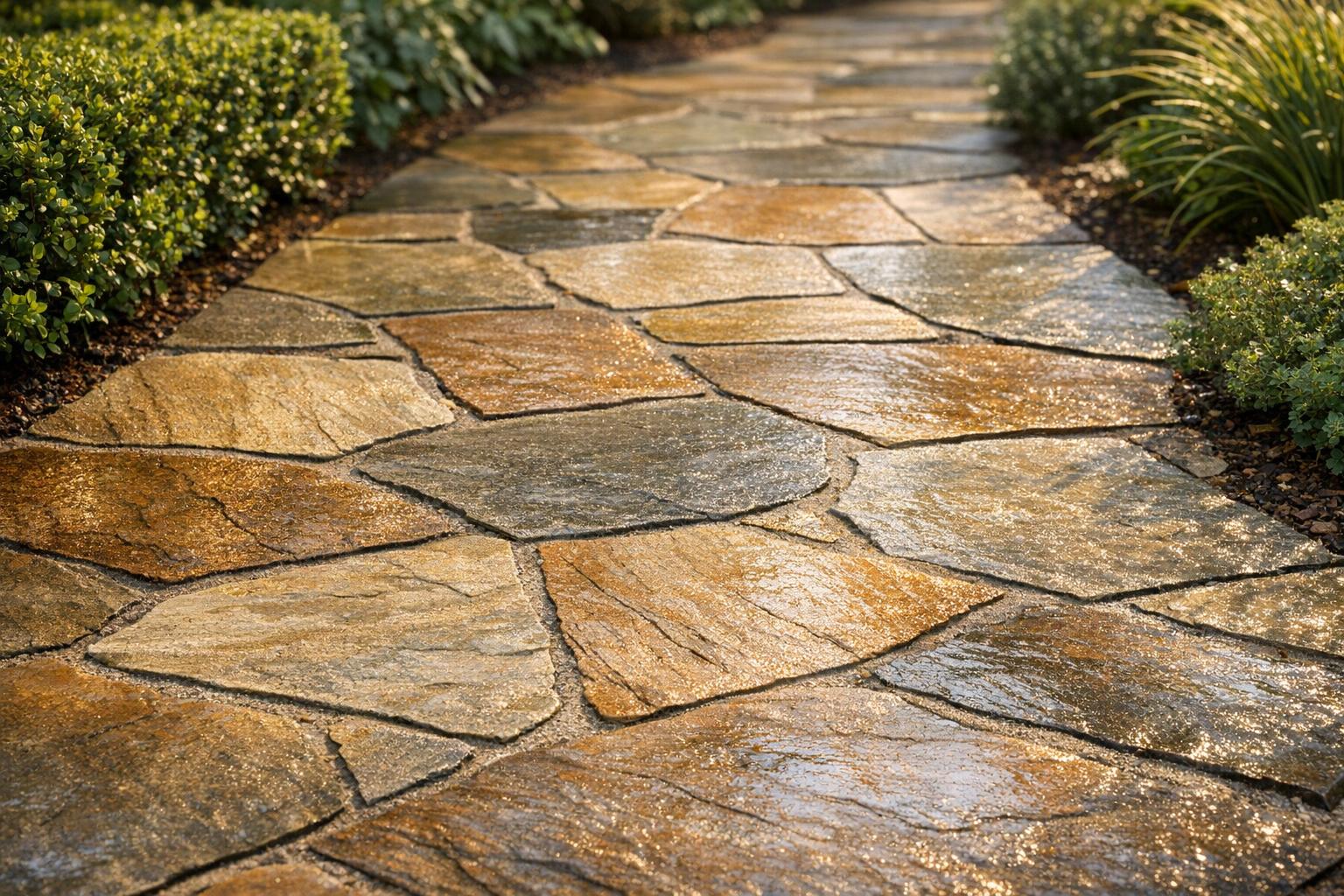
Maintaining a flagstone walkway is simple with the right approach. Here’s what you need to know:
Tailor your maintenance routine to your walkway’s construction type, stone material, and local weather. Address small issues quickly to avoid costly repairs. Professional help may be needed for structural concerns or drainage problems.
Before diving into maintenance, it's important to know how your flagstone walkway is constructed and the materials it uses. This knowledge will help you make smarter decisions when it comes to cleaning, sealing, and making repairs. Let’s break down the types of walkways, materials, and common problems so you can tailor your upkeep approach.
Flagstone walkways generally fall into two categories: dry-laid and mortar-set. Each type has its own perks and challenges.
We recommend clearing the snow in the winter to prevent prolonged ice and moisture penetration.
Knowing how your walkway was installed is a good first step. From there, it’s essential to understand the type of stone used.
The type of stone used in your walkway plays a big role in its maintenance needs. Here are a few popular options:
All natural stones benefit from sealing, but porous stones like sandstone and limestone need prompt sealing right after installation to protect against stains and damage.
Keeping your walkway safe and attractive means staying ahead of common issues. Here’s what to look out for:
Keeping your flagstone walkway in top shape doesn’t have to be complicated. Regular cleaning and a bit of seasonal care can go a long way in maintaining its appearance and avoiding costly repairs. Most tasks are simple and require only basic tools. Below, you'll find the essential tools, a step-by-step cleaning guide, and tips for seasonal maintenance based on your local climate.
For everyday cleaning, you’ll need a push broom to clear debris, a nylon brush for scrubbing, a garden hose with a spray nozzle for rinsing, and a pH-neutral cleaner or mild detergent for washing. If you’re dealing with mold or stubborn stains, add rubber gloves, protective eyewear, and a diluted bleach solution (a 50/50 mix with water) to your toolkit. Optional tools like a leaf blower or air compressor can make clearing debris and cleaning joints faster and easier.
Start by sweeping away loose debris - this prevents dirt from grinding into the stone. Next, rinse the walkway with a garden hose to loosen surface grime. Prepare a cleaning solution by mixing a pH-neutral cleaner with water according to the instructions on the bottle. Use a nylon brush to scrub the surface in circular motions, focusing on high-traffic areas and any visible stains.
Once you’ve scrubbed the walkway, rinse thoroughly to remove all soap residue, as leftover cleaner can create slippery spots. Allow the walkway to air dry naturally, but avoid cleaning during peak sunlight hours to prevent streaking caused by rapid drying.
Be cautious with pressure washers - if you use one, stick to moderate pressure to avoid damaging the stones or dislodging the joints. For grease or oil stains, clean them immediately, as porous stones like sandstone and limestone can absorb liquids quickly, leading to permanent discoloration.
Once your walkway is clean, adjust your care routine based on the season and your local weather conditions to keep it looking its best.
Your walkway’s care needs can vary depending on your climate. In areas with freeze-thaw cycles, clear snow promptly and use stone-safe de-icers to prevent water from seeping into the joints, which can lead to freeze-thaw damage.
In humid or damp climates, watch for moss or mold in shaded areas. Treat these spots with a diluted bleach solution, scrub gently, and rinse right away to avoid harming the stone. If you live in a dry, high-UV region, reseal your walkway every one to two years. Sun exposure and occasional rain can wear down sealers, leaving stones more prone to staining.
Lastly, keep an eye on the joints. Sand can shift over time in dry-laid walkways, and mortar in mortared joints may crack. Regularly checking and addressing these issues will help maintain the walkway’s stability.
Sealing your flagstone walkway acts as a protective shield, keeping water, oil, and stains from seeping into the stone. Without this barrier, moisture can freeze in small cracks, leading to damage like cracks, spalling, and shifting stones over time. Sealers also help prevent efflorescence - a white, chalky residue caused by moisture carrying salts to the surface - and make the walkway more resistant to algae, mold, and fungi.
Wondering if your walkway needs sealing? Try the "Splash Test": sprinkle water on the stone and see how quickly it absorbs. If the water soaks in within five seconds, it’s time to seal. Once you've determined the need, the next step is selecting the right type of sealer.
There are two main categories of sealers, each with its own advantages. Penetrating sealers sink into the stone, repelling water and oil while keeping the stone's natural, matte look intact. On the other hand, film-forming sealers create a surface layer that enhances the stone's color and patterns with a glossy or "wet" finish. However, these can become slippery when wet.
"We like matte finish sealers, which keep the natural appearance of the stone while still shedding water. This material is simply rolled and brushed on with standard rollers and brushes." - Roger Haywood, Owner, Accent Landscapes
The choice of sealer depends on your stone type and local climate. Porous stones like sandstone and limestone benefit significantly from sealing, while denser materials like slate are naturally more resistant to weathering. In regions with freeze-thaw cycles or intense UV exposure, sealing becomes especially important to prevent long-term wear and damage.
Preparation is key. Start by thoroughly cleaning your walkway to remove dirt, mildew, and any efflorescence, as these can interfere with the sealer's effectiveness. Rinse well and let the stone dry completely before applying the sealer.
Test the product on a small, inconspicuous area first. Once you’re happy with the results, apply the sealer in sections of about 60 square feet. Use a wide paintbrush for smaller areas or a long-handled roller for larger sections, working out of direct sunlight to ensure even application.
Keep the surface slightly wet with sealer for 5 to 15 minutes. If the first coat absorbs immediately, apply a second coat while the surface is still damp. After application, let the walkway dry and remain free of foot traffic for 12 to 24 hours to allow the sealer to cure fully. Regular inspections will ensure your walkway stays protected over time.
Keep an eye on your walkway’s condition by performing the Splash Test once a year. Most sealers need reapplication every 1 to 3 years, depending on factors like foot traffic and weather. High-traffic areas or those exposed to harsh UV rays and heavy rain may require more frequent maintenance.
"UV rays and rain degrade sealants; reapply every two years." - Colby Coward, Texas Best Fence
During the winter months, avoid using deicing salts on sealed flagstone, as they can wear down the protective layer. Instead, use sand for traction. With regular inspections and timely resealing, your walkway will stay protected and maintain its appearance for years to come.
Even with regular upkeep, flagstone walkways can face wear and tear over time. Factors like freeze-thaw cycles, shifting soil, and heavy foot traffic often lead to loose stones, cracked mortar, or uneven surfaces. The good news? Many of these problems are manageable if tackled early. The repair process depends on how the walkway was installed - dry-laid or mortar-set. Let’s break it down.
Dry-laid walkways are relatively simple to repair since individual stones can be removed and reset without disturbing the entire path. Start by carefully lifting the loose stone with a pry bar, taking care not to damage the edges. Once it’s out, clean away any old sand or debris from the base. If the stone has sunk, add a fresh layer of masonry sand or stone dust. On the other hand, if it’s too high, remove some of the base material. Use a level or mason string to ensure the stone sits evenly. Once it’s positioned, gently tap it into place with a rubber mallet - avoid using a metal hammer, as it could chip the stone. Finish by sweeping polymeric sand into the joints and lightly misting it with water to activate the binding agent. Allow 24–48 hours for the repair to set, or up to five days for maximum stability.
"If a stone moves in a dry-laid walk, it is simple to fix." - Eric Nelson, Landscape Contractor
Mortar-set walkways take a bit more effort to fix. Begin by removing the damaged mortar using tools like a cold chisel, hammer, or an angle grinder with a diamond blade. Once the old mortar is cleared, clean the base thoroughly with a wire brush or an air compressor to ensure the new mortar adheres properly. Next, prepare fresh Type M or Type S mortar following the manufacturer’s instructions. Type M mortar, which reaches 2,500 PSI after 28 days, is ideal for flagstone, while Type S (1,800 PSI) works well for horizontal surfaces. Spread a mortar bed 0.5 to 1.5 inches thick - going thicker than 1.5 inches increases the risk of cracking. Place the stone back into position and tap it gently with a rubber mallet to ensure proper alignment. For smaller fixes, masonry adhesive offers a quicker alternative, setting in just 10–20 minutes per stone.
"Mortar is the weak link, and should be kept to a minimum." - Devin Devine, Flagstone Contractor
While many repairs are DIY-friendly, some situations are best left to professionals. Issues like large cracks spanning multiple stones, persistent water pooling, recurring efflorescence, or leaning sections often indicate deeper problems. Addressing these early can prevent more extensive (and expensive) repairs later. Companies like MidSouth Concrete & Masonry specialize in complex flagstone repairs, including structural rebuilds and drainage corrections. If in doubt, it’s worth bringing in an expert to ensure the job is done right.

Flagstone Walkway Maintenance Schedule by Climate Type
Flagstone maintenance depends heavily on your local climate and how often the area is used. By tailoring your cleaning, sealing, and inspection routines to these factors, you can avoid costly repairs and keep your walkway looking great. Below, we’ll dive into how climate and traffic levels impact maintenance schedules.
Your region’s climate plays a big role in determining how often you’ll need to care for your flagstone. For instance, humid or damp areas are prone to moss, mold, and mildew, especially in shaded spots. To keep this in check, inspect your walkway every month and, at the first sign of growth, clean it with a diluted bleach or muriatic acid solution (1 part solution to 10 parts water).
In contrast, arid climates bring their own challenges. The intense UV rays can break down sealers, meaning you’ll need to reapply them every two years. However, sealing during extreme heat can backfire. As Rosie on the House warns:
As it sits in the hot sun, sealed flagstone will likely deteriorate and discolor at a faster rate due to the moisture trapped underneath the stone.
For snowy or freeze-thaw climates, springtime inspections are crucial. Check the joints for damage caused by freezing and thawing cycles, and avoid using de-icing salts, which can erode both the stone and mortar. Instead, use sand for traction. Roger Haywood, Owner of Accent Landscapes, advises:
We also recommend clearing the snow in the winter so that it will not melt and stay icy for long periods of time. This helps to keep the moisture and ice from penetrating the joints.
Here’s a quick overview of climate-specific maintenance:
| Climate Type | Key Issue | Recommended Schedule |
|---|---|---|
| Humid / Damp | Moss, mold, and mildew growth | Inspect monthly; clean with diluted bleach/acid as needed |
| Arid / Sunny | UV sealant degradation; stone heat | Check seal integrity yearly; reapply sealer every two years |
| Snowy / Cold | Freeze-thaw mortar damage; shifting | Clear snow after each snowfall; inspect joints every spring |
The amount of foot traffic your walkway sees also impacts how often it needs attention. High-traffic areas demand more frequent upkeep. Inspect these spots monthly for loose stones, power wash as needed, and plan to reseal every 1–2 years to guard against wear and staining. Heavy use can also wear down joint fillers like polymeric sand or grout faster, so check and replenish them regularly to keep stones stable.
For low-traffic walkways, the focus shifts to aesthetics and basic upkeep. Sweep regularly to prevent debris buildup, manage weeds in the joints, and conduct seasonal inspections - usually in spring and fall - rather than monthly. Regardless of traffic levels, blot spills immediately to avoid permanent staining, especially in areas near outdoor kitchens or entertaining spaces where spills are more common.
Maintaining a flagstone walkway doesn’t have to be complicated. Simple habits like regular sweeping, cleaning up spills right away, and checking for damage seasonally can go a long way in keeping your walkway in great shape. To protect against moisture, UV rays, and stains, consider applying a matte-finish penetrating sealer every one to two years and ensure the joints stay properly filled.
Your maintenance routine should match your environment. High-traffic areas or places with harsh weather may need more frequent care, while milder conditions might only require seasonal attention. Addressing small issues as soon as they appear can save you from costly repairs down the road. While basic upkeep is manageable for most homeowners, more complex problems are best left to professionals.
A professional installation is key to avoiding common problems. Proper leveling, a strong base, and well-applied mortar ensure your walkway stays durable and functional. Good drainage and a solid foundation are especially important to prevent structural issues over time.
If you’re in Memphis, MidSouth Concrete & Masonry offers expert flagstone installation and maintenance services. Their work ensures your walkway is built to handle the local climate, giving you a long-lasting and reliable investment.
You can spot when your flagstone walkway needs resealing by keeping an eye out for a few telltale signs:
Addressing these signs with a high-quality sealant can protect your walkway and help maintain its appearance.
To fix loose or damaged flagstones, begin by gently lifting the stone out of place and thoroughly cleaning the area underneath. Once the surface is prepped, apply a durable masonry adhesive or mortar to the base. Carefully set the flagstone back into position, pressing it down firmly. Use additional adhesive or mortar to seal the edges, ensuring a snug fit. To finish, sprinkle a mix of stone dust and sand over the repaired area to help it blend seamlessly with the rest of the walkway.
Allow the repair to cure for about 4–5 days before stepping on it. This simple method not only restores the stability of your walkway but also keeps it looking polished and well-maintained.
To keep your flagstone walkway looking its best, you’ll need to adjust your maintenance routine according to your local climate. Weather conditions can take a toll on the durability and appearance of your walkway, so tailoring your care is essential.
Setting up a maintenance schedule tailored to your climate will go a long way in preserving the beauty and durability of your walkway all year long.
© 2026 MidSouth Concrete & Masonry. All rights reserved. Designed by Fullscale.
